LAN

The Latino Action Network is a grassroots organization composed of individuals and organizations that are committed to engaging in collective action at the local, state and national levels in order to advance the equitable inclusion of the diverse Latino communities in all aspects of United States society.
Showing posts with label New Jersey. Show all posts

Monday, April 22, 2019

Control gentrification in Jersey City now, community leaders say. Residents are being pushed out of their homes.

(This Op-ed originally appeared on NJ.com on 4/18/19)


Jersey City skyscrapers
Long-time residents of Jersey City are being pushed out


By Richard Smith and Christian Estevez
With skyrocketing rents outpacing what most ordinary people can afford, Jersey City should be coming to terms with the fact that its residents are being priced out and forced out.

Developers who are making unfathomable amounts of money building homes for wealthy new residents have no incentive to solve this problem. It is time for Mayor Steven Fulop and the City Council to adopt an effective policy that requires developers to make at least 20 percent of new homes affordable as a way to curb the gentrification that is emptying Jersey City of longtime residents. In the case of city-owned land, or when public subsidies are used, the percent should go above 20 percent.

For decades, our state’s urban cores suffered from disinvestment, while wealthy suburban communities boomed. This disparity, driven by many towns’ exclusionary zoning laws, has helped make New Jersey one of the most racially and economically segregated states in the country.

As New Jersey’s urban communities revitalize, working families and communities of color in places like Jersey City are at the losing end of a real estate market that pursues profits over fairness and high rents over fair rents.

After living in Jersey City through challenging decades of disinvestment, lower-income African American and Latino families are being particularly threatened with displacement as investment floods in.

While we welcome additional investment in New Jersey’s cities, it must not come at the cost of displacement and homelessness. Our elected officials have an obligation to prevent the negative impacts that rapid gentrification has on our state’s most vulnerable communities.

Jersey City’s elected leaders must act – or they risk turning the city into an exclusive enclave of the rich and powerful.

It is irresponsible that Jersey City has added thousands of new apartments in recent years, rewarding developers with lucrative density increases, without putting inclusionary zoning requirements in place to protect lower-income families – as permitted under state law.

Left to their own devices, powerful developers will build housing for people earning over $100,000 annually and call these units “affordable.”

But that is not where the greatest need is.

Jersey City must target new affordable housing requirements to protect families earning as little as $20,000 to $45,000 per year – where the need is greatest.

And officials must prevent new requirements from being undermined by loopholes that would allow developers to wriggle out of their affordable housing requirements.

An effective fair housing policy must focus on housing – not be subverted as a tool to meet other goals while allowing gentrification to take over the city.

Mayor Fulop’s press releases and social media posts in recent years have claimed that his administration is going to address this issue. Most recently, the mayor wrote on social media last November that “Jersey City will be enacting an inclusionary zoning ordinance like many other major cities. … It is very close to becoming reality and will be a huge benefit to keeping Jersey City a special mixed-income community.”

But to date, there has been no real progress. While the mayor’s promises go unmet, developers are making Jersey City a “special” community for New York transplants who think nothing of paying $1 million for a condo – at the expense of the city’s African-American and Latino residents.

Indeed, while Jersey City stands still, other nearby cities have put in place protections for longtime residents and adopted equitable housing policies, including Hoboken, Newark and Union City. These ordinances require homes to be affordable at the lowest possible ranges.

Hoboken is even in the process of strengthening its affordable housing ordinance.
These gentrifying communities have benefited from the leadership of mayors like Dawn Zimmer, Ravinder Bhalla, Ras Baraka, and Brian Stack. Yet in the face of incredible progress, Jersey City, which has the greatest potential and the highest need, lags behind.

The time for Jersey City to adopt an effective housing policy has arrived.
We urge Mayor Fulop and the City Council to do what should have been done long ago: Adopt an inclusionary zoning ordinance that ensures that all residents of Jersey 

City benefit from the private market interest in the city. The ordinance should require all developments to have a minimum of 20 percent affordable housing. No buyouts, no loopholes, and no scams.

We need legislation that forces developers to address the negative consequences of gentrification. And we need it now.

Christian Estevez is president of the Latino Action Network and Richard Smith is president of the NAACP New Jersey State Conference.

Tuesday, February 19, 2019

COURT AGREEMENT PROVIDES NEW JERSEY JUNIORS AND SENIORS WITH CLEAR PATHWAYS TO HIGH SCHOOL GRADUATION

red school house


A Court-approved agreement reached with the New Jersey Department of Education (NJDOE) will provide clear pathways to graduation for all current high school juniors and seniors. The agreement was negotiated by the Education Law Center and the ACLU of New Jersey on behalf of several civil rights and parent advocacy groups, including the Latino Action Network, Latino Coalition of NJ, Paterson Education Fund, and NAACP NJ State Conference, that successfully challenged high school graduation testing requirements imposed by the NJDOE in violation of state law.

On December 31, 2018, the Superior Court, Appellate Division, invalidated the graduation assessment regulations enacted by the NJDOE in 2016, which included the Partnership for Assessment of Readiness for College and Careers (PARCC) end-of-course exams, because they violated statutory requirements for “exit” testing to obtain a high school diploma. In January, the NJDOE filed a motion for partial reconsideration, asking the Court to amend its order to address graduation requirements for current juniors and seniors.

In response, the groups that brought the case sought broader relief and highlighted the fact that the NJDOE’s request would leave thousands of students, who had not yet satisfied the testing mandate, without clear options to fulfill the requirement and earn their diplomas.

The agreement filed today will ensure all high school students in the classes of 2019 and 2020 have clear pathways to achieve a New Jersey diploma. The agreement postpones the effective date of the Court’s decision invalidating the graduation testing regulations and allows all juniors and seniors to use the rules defined in the regulations for the class of 2019—the broadest set of options—to fulfill the graduation testing requirement.

The agreement will also provide the NJDOE with time to propose new graduation testing rules for the classes of 2021 and 2022, current freshman and sophomores, that comply with statutory requirements and provide fair notice to affected students.

“We are pleased to reach an agreement that safeguards the graduation rights of seniors and juniors who relied on the rules invalidated by the Court,” said Jessica Levin, ELC Senior Attorney. “We look forward to working collaboratively with State officials to develop appropriate graduation policies for future classes.”

For more information about the lawsuit challenging the high school graduation regulations, click here.

Thursday, January 24, 2019

TESTIMONY BY THE LATINO ACTION NETWORK BEFORE THE NEW JERSEY ASSEMBLY LABOR COMMITTEE ON JANUARY 24, 2019

15 an hour hearing


TESTIMONY BY
THE LATINO ACTION NETWORK
BEFORE THE NEW JERSEY ASSEMBLY LABOR COMMITTEE
JANUARY 24, 2019
DELIVERED BY:
Christian Estevez, President
Latino Action Network
2560 U.S. Highway 22, Suite 322
Scotch Plains, NJ 07076
Phone: (973) 418-7012
esteveznj@gmail.com

Good morning, my name is Christian Estevez and I am President of the Latino Action Network.  We are a statewide advocacy organization dedicated to mobilizing New Jersey’s Latino community to seek greater social, economic and educational justice. The Latino Action Network has been working with a broad coalition of organizations that are committed to helping New Jersey’s working poor by getting the minimum wage raised to $15 per hour.  

I thank you for the opportunity to testify today in support of Assembly Bill A-15 which raises the minimum wage to $15 per hour within 5 years for most workers.

While we believe that it would be more beneficial to raise the minimum wage to $15 per hour immediately, the pace set forth in this bill for the implementation of the increase is a compromise that we feel we can live with.  It is imperative that we achieve a living wage posthaste.

We also remain concerned about those that will be left behind by this bill, especially farm workers and those that work for small businesses.  The bill collectors do not treat people differently based on where they work.  A gallon of milk costs the same for the person that works for the big corporation and the person that works for the small business or on a farm.  No discounts are given because you earn less.

While this bill is not perfect, we feel that we must support it because the status quo cannot be allowed to continue.

It is unacceptable that hard-working people, including a disproportionate number of Latinos, continue to struggle to meet the most basic of needs.  A person earning the current minimum wage in New Jersey of $8.85 per hour would barely earn $18,000 per year if they worked full-time.  That is below the poverty line as set forth by the federal government for a family of three.  The reality is that the average family in New Jersey has 2.7 children.  That means that in a family with 2 children, both parents would have to work full-time jobs just to keep their heads barely 
above the poverty line if they were both earning the minimum wage. Given that New Jersey is one of the most expensive states to live in, earning just above the federal poverty line is just not enough.  Unfortunately, this is a reality for far too many New Jersians.

Latinos are overrepresented amongst low wage earners:

Latinos constitute 17 percent of New Jersey’s population, yet account for 29 percent of low-wage earners that would benefit from a raise in the minimum wage according to a report issued by New Jersey Policy Perspective, an independent nonpartisan think tank that promotes shared prosperity and widespread economic opportunity in the Garden State.  According to the National Employment Law Project, almost 60 percent of Latino workers make less than $15 per hour. 

These numbers speak to the scope of the problem that low wages pose to Latino working families.  While low wages negatively impact workers from all racial and ethnic backgrounds, Latinos are the group that is most disproportionally impacted by this problem.  

The scale of the impact that low wages have on the Latino community can be seen in our schools where Latino parents have a difficult time participating in their children’s education since many have to work two or three jobs just to keep their families above water.  As a result, many Latino students fall further behind academically, making it harder for them to get into college so that they can compete for the high-skilled, high-wage careers that are in demand in New Jersey. Instead, far too many young Latino workers are relegated to low-skilled, low-wage work just like their parents.  

We have an opportunity to break this cycle by passing common-sense legislation that raises the minimum wage in New Jersey to $15 per hour within the next five years.  If we do not act now, we will relegate too many of our working families to poverty and foreclose on the futures of more generations of the children of the working poor.  

Raising the minimum wage will not only help Latino working families, but it will also help Latino owned small businesses and local economies since it will put more money in the pockets of consumers that will spend those dollars on their families’ necessities.  This additional economic activity will lead to job growth and increased profits in communities that are still struggling to recover from the recent economic crisis that was caused by wild speculation on Wall Street.  Raising the minimum wage to $15 per hour will deliver economic stimulus to Main Street where it is needed the most.

We at the Latino Action Network urge you to vote Assembly Bill A-15 favorably out of committee and we hope that your colleagues will support all of New Jersey’s working families by voting in favor of this bill when it reaches the floor of the Assembly.

Thank you.

Tuesday, August 7, 2018

OP-ED: WHY WE NEED $15 AN HOUR MINIMUM WAGE IN NEW JERSEY NOW, NOT LATER

This op-ed by Daniel Ulloa, Vice President of Communication for LAN, originally appeared in NJ Spotlight.com.


Daniel Ulloa, writer
As living costs continue to rise in this expensive state, people are working longer hours for less money just to get by.
We need a $15 an hour minimum wage. Too many people are struggling to make ends meet in New Jersey.

Between the costs of housing, child care, transportation, and healthcare more and more people are working longer hours for less money just to get by, much less thrive. And despite the state’s low unemployment, the fact that wages have remained stagnant makes poverty a pressing issue here.

New Jersey is one of the most expensive states in the country to live in. It was recently ranked among the top 10 most unequal state in the nation. Those who are wealthy can enjoy its benefits far more than struggling workers. And while some of those who are currently struggling can go on to achieve prosperity, they unfortunately are more often the exception to the rule. There is no reason thousands should be made to toil for slave wages simply because it’s possible to find a better job.

Raising the minimum wage is always a popular action. In 2013, when Gov. Chris Christie was re-elected, a ballot measure to increase the minimum wage slightly was approved as well, thus showing such a move has bipartisan support.

Some conservatives object because they feel it would be an onerous burden on companies to pay individuals so much money. But if their customers are also making more money, they’re likely to shop more.

$15 minimum would benefit 1.2M workers in NJ

Furthermore, higher wages mean employees won’t be as likely to leave blue-collar jobs — which in turn means businesses won’t have to spend as much time training new staff. In addition, a more satisfied staff is likely to lead to an increase in productivity.
For those who feel that blue-collar workers shouldn’t make the same money as white-collar workers, remember a rising tide lifts all boats.
According to New Jersey Policy Perspective, raising the minimum wage to $15 would raise wages for 1.2 million workers in the state and inject $4.5 billion into the state’s economy.

There has been some talk of watering down the minimum-wage bill to pay youth workers less than $15 an hour. Most are seen as teenagers from middle-classes families who take the jobs merely for spending money. But youth workers need that money. Contrary to the beliefs of some, they have no desire to be a burden but rather would like to contribute and ease their family expenses. This is especially true in the homes of Hispanic families where their paychecks often go in part to sustaining the family. Youth workers must not be treated as second-class citizens.

Discrimination against older workers

Such an exemption from a $15 minimum would also likely lead to massive discrimination against older workers by employers seeking to bypass the law.

There has also been talk of excluding farmworkers. Farmworkers who perform the most arduous duties also must receive a higher wage. Why should they be left out? Many work long hours for little pay in jobs that few would willingly do. Leaving out a class of workers made up overwhelmingly by people of color is an act of blatant racism.

How are we to call ourselves the Garden State if we do not fairly compensate those who make it so?

There has been a great delay now in anticipation of the bill while living expenses continue to increase due to natural inflation. Delaying an increase for too long would erode the effect of raising the minimum wage.

In 2016, a bill to put $15 on the ballot as a referendum passed both legislative chambers easily but was vetoed by Christie and, unfortunately, the political will wasn’t there to override his veto.

Gov. Phil Murphy ran on raising the minimum wage to $15 and made it one of the central planks of his campaign. However, we have been waiting half a year for the bill to be passed. Working men and women cannot afford to wait. They have been waiting long enough while they are exploited, and deals are made to benefit those who don’t need extra protection.

The Legislature must send a bill raising the minimum wage to $15 an hour to the governor now.

Wednesday, May 2, 2018

Time for Unity on Driver’s Licenses for Immigrants

Time for Unity on Driver’s Licenses for Immigrants


Since the election of our new Governor momentum has been building in the activist community for Driver’s Licenses for undocumented immigrants. Several groups, including the Latino Action Network, have launched campaigns or increased our efforts to get this legislation passed. I was fortunate to meet with several Driver’s License activists at our Annual Latino Action Network Legislative Conference in January and found that we all share a common goal: get Driver’s Licenses legislation passed as soon as posible. 

It is important to note that while we all share the same goal, our tactics differ from organization to organization. In general it is a good thing to have different groups approaching an issue from various directions. That is, unless some of those approaches become counterproductive to the end goal. 

Personal Attacks Against Our Allies

Some activists have taken to launching personal attacks against our allies in the legislature who have demonstrated their commitment to achieving driver’s licenses for immigrants. They have demonstrated this commitment by virtue of their sponsorship of the legislation itself. However, they are now being targeted and harassed by some activists who have launched large scale attacks against them on social media.  This approach is misguided and counterproductive. 

It is misguided because it shows either a lack of understanding of the legislative process or a deliberate attempt to derail this important legislation. It is counterproductive because too much time is being wasted debating whether the people who are championing this law in the legislature are actually in support if it. This time could be better spent talking to legislators who need to be persuaded to support the bill. 

Attacks Against Legislative Sponsors is Misguided

Those that are attacking the legislative sponsors of the Driver’s Licenses bills claim that the sponsors are obstructing the same bill because (a) multiple bills were introduced by different legislators and (b) this law is not getting “fast-tracked” like other bills have been and (c) they do not support the bill because they do not include mention of this particular bill in all of their public statements. 

Multiple Bills: It is not unusual for multiple bills addressing the same issue to be introduced in the legislature. In fact, in 2013 several bills were introduced that dealt with In-State Tuition and Financial Aid for DREAMers. Some bills only dealt with In-State Tuition, other bills only dealt with Financial Aid, and yet other bills included both components. For most of the time leading up to the passage of the legislation, most activists were only focusing on the In-State Tuition component. It was only toward the end that we all coalesced around the idea of pushing for the bills that included both In-State Tuition AND Financial Aid. Our thinking back in 2013 was that even if Governor Christie vetoed the Financial Aid piece, which he did, we would still get the In-State Tuition portion, which we did.  The added bonus was that we already had legislators on the record for having supported and voted in favor of Financial Aid for DREAMers and we could go back to those same legislators in the future when we had a Governor who would sign it into law. In that case, having multiple bills to chose from was helpful to our cause. 

Fast-Tracking:  For the reasons mentioned above, fast-tracking the Financial Aid bill was posible. When the Financial Aid bill was reintroduced in the current legislature, we already knew who the majority of supporters of the bill were by looking at the voting history of the bill back in 2013. We knew who had voted for the bill and those same legislators were very likely to vote for it again this time around. We were then able to focus our attention on those legislators who came to office after 2013 and therefore did not participate in the original vote. 

We also were able to expand our advocacy beyond Democrats and reached out to Republican legislators as well. This resulted in passage of the Financial Aid legislation with bi-partisan support. 

Driver’s Licenses is in a different situation because there has never been a previous vote on this legislation. We, as activists, still have a lot of work to do to garner the support of a majority of lawmakers in both houses of the state legislature.  

Public Statements in Support of Bill:  The best testament a legislature could show of their support of a bill is to become a sponsor of that bill. The legislators that are currently being attacked are the actual PRIME SPONSORS of the bill to provide Driver’s Licenses to Undocumented Immigrants.  Their name is on the top of the bill. They have taken ownership of this issue and will face the consequences (good and bad) of their decision to champion this bill in the legislature. When this legislation passes, and I firmly believe that it will, the Prime sponsors of this bill will reap the reward of praise from the immigrant community that will benefit from it and they will also reap the scorn of the anti-immigrant forces that will vilify them for doing anything that aids immigrant families. They have gone beyond issuing a simple statement in support of the bill, they have tied themselves to the bill and will be forever linked to its fate. 

Attacking Our Allies is Counterproductive 

In the current anti-immigrant climate being exacerbated by President Trump it is hard enough to win over support for this bill from legislators that do not represent large immigrant populations. Our job becomes even more difficult when the champions of this legislation are being attacked by community activists.  Our allies in the legislature are doing their part by (a) putting their names on this legislation as Prime Sponsors (b) being public advocates of this legislation (c) fighting for this legislation within their legislative caucus (c) opening line of communication for activists with key decision makers within state government so that important questions about implementation can be addressed. 

The work that these champions are doing from the inside does not absolve us, the community activists and advocates, from doing our jobs. We still have to do the hard work of reaching out to legislators throughout the state to get them to commit to supporting and voting in favor of this bill. We must reach out to Democrats and Republicans as we cannot afford to leave any stone unturned since this vote might be close and even one Republican vote, like we got with S-699, could help put this bill over the top.  

These unwarranted attacks on the legislative champions of this bill also works to diminish their reputations in the communities they serve and on the floor of the legislature. The attacks give the impression that these legislators do not enjoy the support of their constituents. Nothing can be further from the truth. We would not have accomplished the passage of In-State Tuition and Financial Aid for Undocumented Students without the leadership of the members of the Hispanic Legislative Caucus, especially our three Latina State Senators: Teressa Ruiz, Nellie Pou and Nilsa Cruz-Perez. 

I am confident that with their continued leadership and a lot of hard work on our part we will be victorious in passing legislation that will provide Driver’s Licenses to undocumented immigrants. 

Now is not the time to turn on each other. Now is the time to unite and fight side by side for what we all believe to be the right thing. 

We must put our egos aside and follow our moral compasses that tell us to do what is right for our community. That same moral compass tells us that we should do this work in the spirit of love for the people we serve and for the people we struggle side by side with. So, it is in this spirit that I implore all community activists and legislators to work together because only in unity will we truly be victorious. 

¡Pa’lante!

Christian Estevez, President
Latino Action Network


Monday, March 26, 2018

LATINO ACTION NETWORK APPLAUDS NEW JERSEY STATE SENATE FOR PASSAGE OF FINANCIAL AID LEGISLATION FOR DREAMERS


TRENTON - The Latino Action Network (LAN) thanked members of the New Jersey State Senate for passing legislation that makes state financial aid available to DREAMers (S-699) and to the citizen children of undocumented immigrants (S-700).  In 2013 LAN worked with students to push for the passage of legislation that provided for both In-State Tuition and Financial Aid for DREAMers. While In-State Tuition became law, the financial aid portion was vetoed by then Governor Christie. 

“In 2013 we celebrated our partial victory on In-State Tuition and vowed to continue the fight for Financial Aid for DREAMers”, said LAN President Christian Estevez. “Today was a major step in the fulfillment of that promise.”

“We are on the precipice of a major victory for the DREAMers of New Jersey”, said Frank Argote-Freyre, Chair of the LAN Foundation. “These bills have been in the works for more than a decade I am so very proud to be this close to a successful conclusion.”

Both bills still have to be passed in the State Assembly before going to the governor to be signed into law. 

“Tremendous credit goes to Senate President Steve Sweeney and the bill’s co-sponsors: Senator Teresa Ruiz, Senator Nellie Pou and Senator Sandra Cunningham” said Argote-Freyre. “I also want to make note that both bills passed with bipartisan support, with S-700 passing 36-0 and S-699 passing 26-10 with the  support of Senator Declan O’Scanlan, the only Republican to vote YES on that bill”.

LAN is a broad, statewide coalition of Latino organizations dedicated to political empowerment, the promotion of civil rights, and the elimination of disparities in the areas of education, health, and employment. It was founded in 2009. 


Thursday, October 12, 2017

Is New Jersey Racist?

[The article below features the executive director of the Anti-Poverty Network (APN), Renee Koubiadis, who we are proud to have as a member of the Steering Committee of the Latino Action Network. Please take a moment to read the article and the related report issued by the APN "The Unconfortable Truth: Racism, Injustice and Poverty", which will serve as a guiding document in the policy discussions we must have in our state in the months and years to come if we are to close the gaps that divide the people of New Jersey.  Pa'lante! - Christian Estevez, President, Latino Action Network]

The Anti-Poverty Network of New Jersey recently released “The Uncomfortable Truth: Racism, Injustice and Poverty,” a report that details the effects of structural racism that has long tainted many of our public institutions, and offers a wide range of recommendations on how to combat those effects. What the report makes clear is that the threads of structural racism extend to virtually all aspects of our lives, and untangling those threads will be a long and complex process. We asked the executive director of the Anti-Poverty Network, Renee Koubiadis, to explain more about the findings in the report and her organization’s goals with its release.

The Uncomfortable Truth report focuses on what is referred to as “structural racism.” What does that mean, exactly?
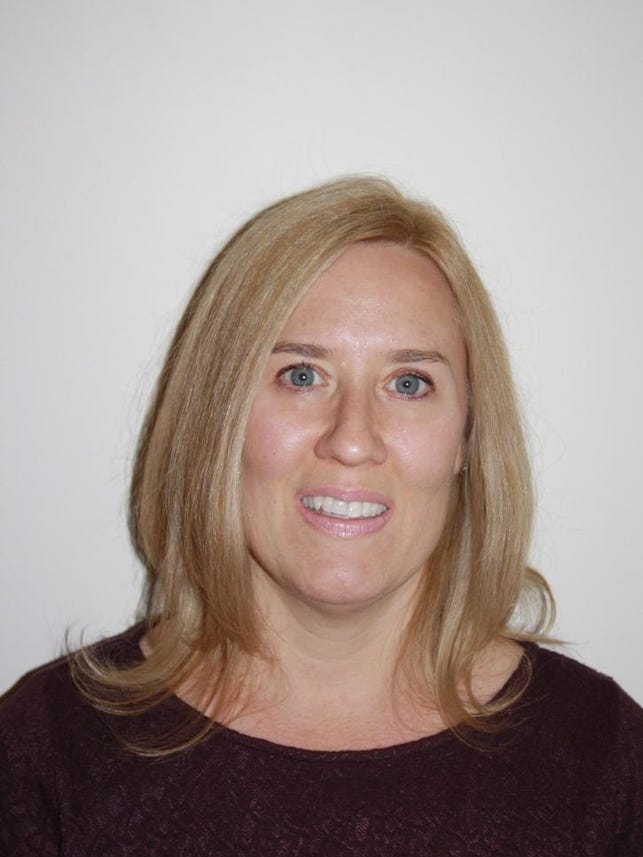
Renee Koubiadis

File photo

Structural racism refers to disparate access to opportunity that is imbedded in the social structures. It is not a direct expression of overt discrimination or prejudice; but it is the residue of the more direct, open racist policies of the past.

What’s to blame for this type of pervasive racism that affects so many of our institutions? Are we talking about actively racist policies, or a kind of underlying racist instinct that impacts our lives in ways difficult to see and identify?

Structural racism is the result of historical conscious and unintentional policies, decisions and programs that have become deeply embedded in today’s culture and institutions. It operates as a perpetuating force and serves as a resistance to change in the historic distribution of wealth. Structural racism can be seen in the results it produces with deep inequities for people of color.

We tend to equate racism with offensive stereotyping and abusive treatment. But is it fair to say that many of us — or most of us — are affected by a more benign racism that maybe causes us to, for example, accept certain stereotypes without condemning them? Perhaps that kind of racism isn’t as harmless as we might like to think?

Systemic racism can operate whether or not the individuals involved hold explicit or subliminal racist attitudes. In its most common form, it is simply the perpetuation of a “status quo” that was shaped by the virulent, overt, intentional racism of the past. It can operate through apparently race-blind policies and purportedly merit-based systems of consequence and reward. It can be worsened by personal prejudice, certainly, but it does not require conscious prejudice. It requires only complacency with a system that produces racist results, as demonstrated by racial and ethnic disparities that have economic and social consequences. As recognized by Dr. Martin Luther King Jr. in his leadership to address structural as well as explicit racism, “He who passively accepts evil is as much involved in it as he who helps to perpetuate it. He who accepts evil without protesting against it is really cooperating with it.”

So if we’re focusing on a broad cultural racism as opposed to individual biases, how does that affect people of color in practice? Are we talking about impacts in every facet of their lives, or do they tend to manifest themselves in specific areas?

The report covers in detail the way that structural racism impacts people of color in housing, access to economic opportunity, the criminal justice system, legal and civil protections, health care, and access to adequate nutrition. With each chapter on these topics, there are a number of policy recommendations for how our state can move forward to ending structural racism.

Let’s zero in one area to highlight. Structural racism has a significant impact on economic opportunities and success and is a driving force behind poverty. What statistics out there best quantify that?

The recent United Way of Northern New Jersey ALICE (Asset-Limited, Income-Constrained, Employed) report shows that 14 percent of people of color are below the Federal Poverty Level (FPL) in New Jersey, while 33 percent are ALICE. It means that 47 percent of people of color in New Jersey have income insufficient to meet all of their basic necessities. This compares to 7 percent of white households who live below the FPL level and 24 percent who are ALICE. Further, a 2012 study found that African American women spent seven more months on Temporary Assistance to Needy Families (TANF) assistance than white women. However, they were no more likely to pass the five-year lifetime limit for TANF that was imposed in 1996. The same study found that when these women found employment, it was mostly low-wage. In addition, a new report from the Institute for Policy Studies showed that wealth of the median black household declined 75 percent between 1983 and 2013. The median wealth of Latino households declined 50 percent during the same time. It is estimated by the year 2024 whites will own 99 and 75 times the wealth of blacks and Latinos respectively. These income and wealth disparities are the result of job discrimination, discriminatory zoning policies that excluded African Americans from following the good jobs to the suburbs, and educational disadvantages generated by our “apartheid” school system.

Let’s talk a little about the many recommendations included in the report. They cover a lot of ground on how to combat structural racism, but can you summarize the overall goals? Do you hope in time to reduce racism in our society, or is the focus more on better adapting to the presence of that racism?

APN set about developing this report to call for a statewide committed, coordinated action to dismantle structural racism. Utilizing education, mobilization and advocacy, community members, government officials, religious institutions, organizations, businesses and legislators can work together to help eradicate the harsh outcomes of structural racism on people living in poverty in New Jersey. We intend to generate a public response that will lead to the implementation of policies and legislation reflective of the findings and recommendations in the report.
“The Uncomfortable Truth: Racism, Injustice and Poverty,” a report that details the effects of ...more

Getty Images/iStockphoto

Among the recommendations is the restoration of the Office of the Public Advocate. Why is that so important in this context?

A restored independent Office of the Public Advocate, having the power and resources to audit public agencies, would have as a priority mandate the charge to evaluate policies or programs that perpetuate racial and gender disparity in our state. The Public Advocate would be the voice of aggrieved, disadvantaged residents of our state, those affected by public policies and actions that are unjust, inequitable, discriminatory or contrary to the public good.

A major point of emphasis in the report is the need to prioritize the problem. Yet it feels like as a society we’re moving in the wrong direction on discrimination. Do you believe that’s truly the case, or is that perception unduly influenced by what we’re seeing in Washington?

As a nation we were built upon racism, with slave labor propelling us forward in our growth. Individual, overt racism is not something that we studied for this report. There is certainly national attention currently focusing on people who both espouse racially charged speech and those who seek peace and justice. The fact that structural racism exists is undeniable. That is why it is so important to begin a concerted effort to educate the public and examine the ways in which structural racism perpetuates poverty and keeps a large portion of our residents from being able to fully participate in our state’s economy. Moreover, including people of color with lived experience of poverty in the work ahead is critical to moving forward towards meaningful, lasting change.

How does New Jersey compare to other states in terms of its structural racism? Are there lessons to be learned from other locales that will help here?

New Jersey is the third most segregated state in the nation in terms of housing and education. People of color have consistently been denied access to opportunity in terms of where they live, access to jobs and education, and barriers in the form of a discriminatory criminal justice system. APN and the John Watson Institute of Public Policy at Thomas Edison State University released “The Cost of Poverty,” in May 2016, which outlines how we have pushed poverty into all of our urban areas big and small over the last few decades. These municipalities are left without a business and corporate tax base and other resources to deal with this great need. While people of color are disproportionately pushed into poverty across the nation, segregation from opportunity in New Jersey is what sets us apart.

Structural racism is by its nature embedded in our culture; some examples we don’t even recognize because we’ve never seen the alternative. Doesn’t that mean that any meaningful progress is destined to be slow at best?

The speed with which structural racism is addressed is directly related to express, unequivocal, aggressive recognition that it exists and is embodied in any given policy or practice. Once the public comes to understand and accept this judgment, failure to act is intentional racism. Remedial actions can be as swift as the rapid, nearly unanimous acceptance of same-sex marriage. We need to be prepared for the long haul, but open to the possibility of more expeditious responses when the opportunity arises. We have already received positive response from New Jersey’s leaders on some of the recommendations in the report. Indeed, recommendations like increasing the TANF benefit level and eliminating the family cap have been passed by our legislature with bipartisan support twice in the current legislative session, but were vetoed by our governor. So there are solutions we know that our leaders, advocates and residents agree upon that can be achieved more quickly.

If you were to prioritize the report’s own recommendations, where do you believe is the best place to start?

Two of the over-arching recommendations in the report: to reestablish the Office of the Public Advocate and strengthen the Division of Civil Rights would go a long way toward providing a voice and protections for people of color who face significant barriers to economic opportunity. These offices would be helpful to residents who are victims of wrongful evictions, car repossessions, and discrimination in employment and housing.

So look ahead for us — five years, 20 years, whatever time frame you think is appropriate. What do you believe would represent a successful outcome from The Uncomfortable Truth report?

Over the next 10 years, APN hopes that this report will spark meaningful discussion across the state about structural racism and the way it manifests in people’s lives. We believe that more research and data collection must be done to truly understand all of the issues. Further, the intent of the report is to build consensus among community members, government officials, religious institutions, organizations, businesses, legislators, and people with lived experience of poverty to not only change the conversation, but to enact a number of the policy solutions in the report so that structural racism would be eliminated in New Jersey. If nothing else, we would hope that in 10 years New Jersey has moved well down the list of most segregated states. That would speak to meaningful progress in a profound way.

About the contributor

Renee Koubiadis is executive director of the Anti-Poverty Network of New Jersey. She is a licensed social worker who serves as secretary/treasurer on the Board of the Affordable Homes Group Inc. in Burlington County and on the Board of Trustees for the New Jersey Coalition to End Homelessness (NJCEH). Previously, she was advocacy coordinator for the National Association of Social Workers – New Jersey chapter, and assistant state director for the Citizens’ Campaign.

Friday, October 6, 2017

Unidos Por Puerto Rico

The Latin American Coalition is collecting relief supplies for hurricane victims in Puerto Rico this weekend (Saturday, October 7 and Sunday, October 8) in the rear parking lot of Plainfield City Hall. See announcement below for details. 


LUPE PAC Annual Awards Reception

LUPE PAC Annual Awards Reception honors outstanding leaders who are shaping politics and policy in the state of New Jersey. The honorees are leaders who have a record of supporting LUPE PAC's mission to increase the number of Latinas in NJ elected and non-elected office. Join LUPE in honoring their service to New Jersey.


Individual tickets $125

For more information, contact Cristina Pinzon at 908-447-3964 or via email at Cristina@statesideaffairs.com. 


New Jersey DACA and Immigrant Youth Assembly


Join DACA and a Immigrant Youth from throughout the state and fight for a clean DREAM Act!


Thursday, August 31, 2017

Ending DACA harms N.J.'s economy, wastes future of Americanized immigrants | Opinion


By Erika J. Nava 

Ending the common-sense 2012 immigration initiative that has allowed more than 20,000 young New Jerseyans realize the promise of the American Dream and contribute to the state's economy would waste the potential of these young striving immigrants -- and cause serious harm to the Garden State's economy. 

In fact, New Jersey would be one of the hardest hit states -- with the fifth largest economic loss -- if this successful program is ended.  

The Deferred Action for Childhood Arrivals (DACA) program allows some undocumented young residents who were brought to the United States as minors to stay in the country and work legally. Since its inception, it has given 800,000 young people across the nation a better shot at success. And its recipients have capitalized on the opportunity, getting better jobs, earning higher wages, increasing their participation in the consumer economy and paying taxes. 

But now DACA is under attack and President Trump has only until Sept. 5 to either end the program or fight a lawsuit from 10 state attorneys general; rumors are swirling that he may end the program at any moment. Doing so would disproportionately harm communities across immigrant-rich New Jersey and would be a huge step backward for the country.  

To many undocumented youth who were brought to the U.S. as young children, DACA was the first real opportunity to pursue the American Dream and show their potential in ways that had been denied to them solely because of their legal status. DACA permitted many of them to obtain a driver's license, secure a job that matched their skillset, purchase their first car, travel abroad, attend college and - most importantly - feel less fear that they'd be separated from their families and communities via deportation.  

By stifling these young immigrants' opportunities, ending DACA would also harm New Jersey's economy.  

When more people are able to work legally in higher paying jobs that match their skills, they are less vulnerable to wage theft, workplace exploitation, and less likely to suffer from discrimination due to their legal status. All of these factors help the economy of our state and the nation, as they are translated into higher tax revenue and more economic productivity.  

With 22,000 DACA recipients, only eight states have a higher number than New Jersey. Of these young New Jerseyans, 87 percent are working. They contribute $66 million in state and local taxes each year, the seventh highest level of all states. Ending DACA would cause an immediate 32 percent reduction in those tax payments. 

But the potential harm to New Jersey's economy is much broader than the reduction in tax collections. In fact, if DACA is repealed, the Garden State would lose an estimated $1.6 billion each year in state Gross Domestic Product - the fifth largest dollar loss of all states.  

Ending DACA would also create economic uncertainty for many families.

Many of the young DREAMers -- armed with the slightest bit of economic security -- have been able to take out loans to buy a car or a home, to pay for college or to open a small business. If the program ends, many of these young immigrants will either lose their job altogether, or be forced back into the shadowy low-wage underground, seriously limiting their ability to keep up with loan repayments and starting a cycle of economic distress.   

New Jersey's Congressional Republicans -- who played an outsized role in ensuring that the Trump administration failed to strip health care from millions -- must step up again and put the best interests of the state and country ahead of political party.

Menendez: ending program for immigrant children would be 'heartless'

Sitting on the sidelines and watching as the lives of enterprising immigrant youth are turned upside down is not OK. Our state's moderate voices must join their GOP colleagues from both blue and red states who are voicing their support for DACA and urging President Trump to keep the program intact.  

Despite the myths and xenophobic falsehoods spread by some, we know that once young immigrants are given the chance to participate in America's economy and society, they capitalize on the opportunity.

And we all benefit. Lawmakers should be focused on providing these -- and other -- striving immigrants a real shot at the American Dream, not on stealing their economic futures and dimming ours.  

Erika J. Nava is a Policy Analyst at New Jersey Policy Perspective, a liberal think tank, which drives policy change to advance economic justice and prosperity for all New Jerseyans.

http://www.nj.com/opinion/index.ssf/2017/08/ending_daca_would_harm_njs_economy_waste_potential.html

Tuesday, July 11, 2017

Bail Reform is Working In New Jersey

As members of the New Jersey Integrated Justice Alliance and the New Solitions Campaign, the Latino Action Network has been a strong proponent for bail reform. We are happy to announce that bail reform is working in New Jersey. Below are the five month statistics on bail reform that were recently released by the Administrative Office of the Courts. You can view the full stats here, but below are the main highlights:
 
  • Since January 1st, the jail population in New Jersey has been declined by 19%. When compared to May of 2015, the statewide jail population by almost 36% percent, with reductions as much as 49% in some counties.
  • Around 13% of individuals are being detained after a preventative detention hearing where they are afforded all of their rights. The remaining 87% of defendants are being released on varying levels of monitoring.
 
These numbers are impressive and demonstrate the success of the reform. Because of the  advocacy of our members, thousands of individuals are awaiting trial at home with their families instead of locked up behind bars.Help us spread the word by tweeting the following:
 
#BailReform is working in NJ. @NPR on how the jail population has dropped under the reform while crime is falling. http://n.pr/2txK9x3
 
All eyes are on New Jersey as jurisdictions around the country are looking to us as a leader in pretrial justice. Please see the following news articles that highlight the success and leadership of New Jersey’s bail reform.